Garage Workshop Ideas: Layout, Storage and Setup
By Garage Hobbies TeamLast updated: October 2026
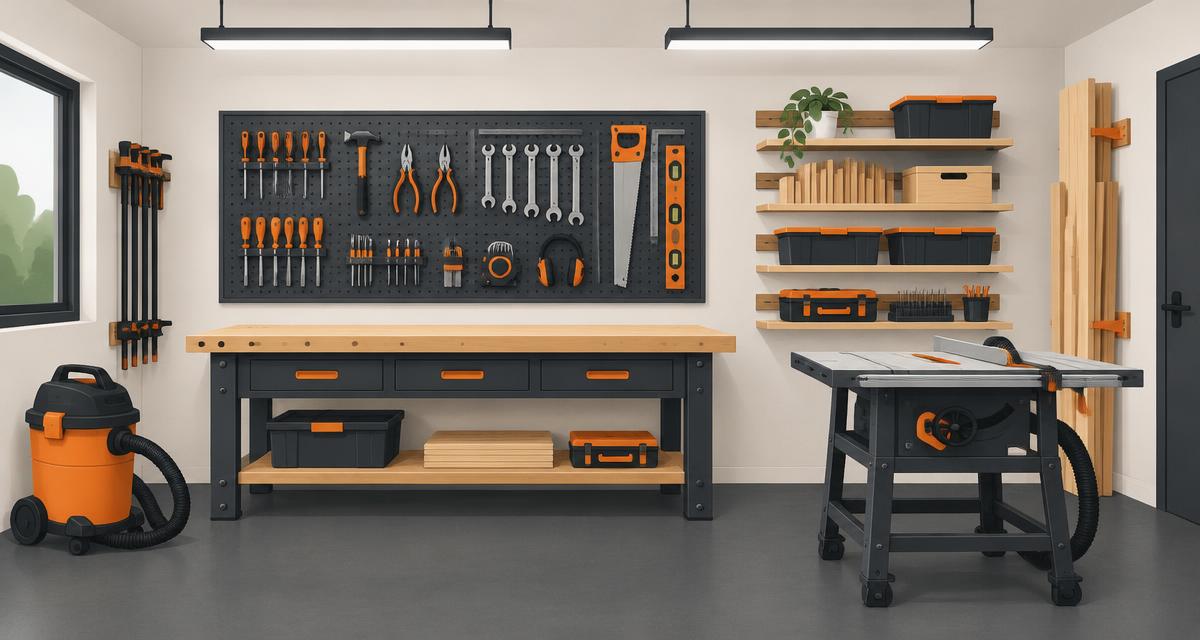
A good garage workshop has clear zones, a solid workbench, wall storage for tools, plenty of power and light, and a plan for dust. Get those right and every project goes faster.
This guide covers layout, benches, storage, power, ventilation, flooring and tips for small garages.
| Storage type | Cost level | Flexibility | Best for | Space use |
|---|---|---|---|---|
| Pegboard | Low | High | Hand tools | Wall |
| French cleats | Low | Very high | Custom holders | Wall |
| Slatwall | Medium | High | Mixed tools | Wall |
| Rolling tool chest | Medium | Medium | Mechanic tools | Floor, mobile |
| Wall cabinets | Medium | Low | Dust-free storage | Wall |
| Overhead racks | Low | Low | Lumber and bins | Ceiling |
Workshop layout zones
Plan your shop around how materials move. Work should flow from storage to cutting to assembly to finishing.
Storage zone
Keep lumber and sheet goods near the garage door so you can load them in easily.
Cutting zone
Put the main saw near storage with clear space in front of and behind the blade for long boards.
Assembly zone
The workbench sits in the middle of the shop with room to walk around it.
Finishing zone
Keep finishing away from dust, with good airflow. A corner near a window or the door works well.
Workbench ideas
Your workbench is the most used thing in the shop. Make it solid, flat and at a comfortable height.
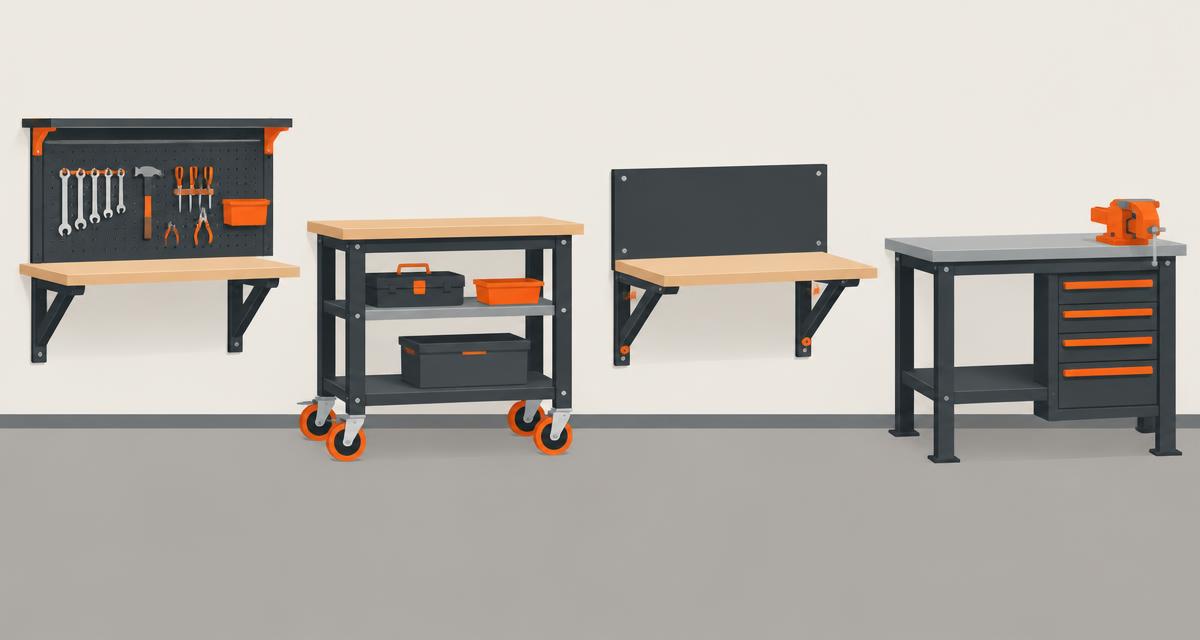
- Wall bench: saves space and gives a spot to mount storage above.
- Rolling bench: moves out of the way when you need to park.
- Fold-down bench: great for small garages.
- Outfeed bench: doubles as support behind the table saw.
- Mechanic bench: steel top and drawers for car work.
Tip: add a vise and a power strip to your bench. You will use both every day.
See every style in our garage workbench ideas guide.
Tool storage
Get tools off the bench and onto the walls. When every tool has a home, cleanup is fast.
Pegboard
Pegboard is low cost and easy to install. Use hooks for hand tools and trace outlines so you know where each one goes.
French cleats
French cleats are angled strips on the wall that hold custom holders. You can move holders anytime, which makes them very flexible.
Cabinets
Closed cabinets keep dust off tools and supplies. Use them for finishes, glue and power tools.
Use overhead racks for lumber and bins of rarely used items.
Power and lighting
Most garages need more outlets and better light to work as a shop. Plan outlets along each wall at bench height. Larger tools may need their own circuits.
Use bright LED shop lights across the ceiling and task lights over the bench and saw. Follow local codes and use a licensed electrician for all new wiring and subpanels.
Dust and ventilation
Dust control protects your lungs and keeps the house cleaner. Start with a shop vac on your sanders and saws. Add a dust collector as the shop grows.
An air filter helps catch fine dust. Open the door and use an exhaust fan when you finish, glue or weld. Wear a mask or respirator rated for the work. For ducted fans or big changes, follow local codes and use a licensed pro.
Flooring
Bare concrete is hard on feet and tools. Anti-fatigue mats at the bench and saw help a lot.
Sealed concrete or epoxy makes sweeping easy. Avoid slick finishes where sawdust collects. Interlocking tiles work but can trap debris in seams.
Small garage workshop tips
A small shop can still do big projects. Use height and wheels.
- Put tools on mobile bases with locking casters.
- Use fold-down benches and wall mounted tools.
- Pick multi-use tools like a track saw over many big machines.
- Store tools on the walls above the car hood line.
- Work outside on the driveway on good days.
Safety
Wear eye and hearing protection every time. Keep blades sharp and guards on. Unplug tools before changing blades or bits.
Keep a fire extinguisher by the door and a first aid kit nearby. Store oily rags in a metal can with a lid, since they can catch fire on their own. Keep the floor clear of cords and scraps.
More ideas: see cool garage ideas and our list of garage hobbies like woodworking and welding.
Frequently asked questions
How do I lay out a garage workshop?
Split the space into zones for storage, cutting, assembly and finishing. Keep lumber near the door, the saw nearby, the bench in the middle and finishing away from dust.
What is better, pegboard or french cleats?
Pegboard is cheaper and fast to set up. French cleats are more flexible and hold heavier tools. Many shops use both.
How many outlets does a garage workshop need?
Plan outlets on every wall at bench height, plus dedicated circuits for big tools. Follow local codes and use a licensed electrician.
How do I control dust in a garage workshop?
Connect a shop vac to your tools, add a dust collector and an air filter, open the door for airflow and wear a rated mask.
Can I have a workshop and still park in my garage?
Yes. Put tools on mobile bases, use fold-down benches and store everything on the walls. Roll tools out when you work.
Workshop guides
Related guides
- Garage Hobbies25 things you can do in your garage.
- Cool Garage Ideas to Upgrade Your SpaceFloors, lighting, golf sims, offices, bars and ideas for car guys.
- Garage Gym Ideas: How to Build a Home Gym in Your GaragePlan the space, pick the floor and gear, and build a gym you will use.
- Garage Organization Ideas That Free Up Your FloorShelving, cabinets, wall systems and ceiling storage that clear the floor.