Garage Workbench Ideas for Every Space and Skill Level
By Garage Hobbies TeamLast updated: October 2026
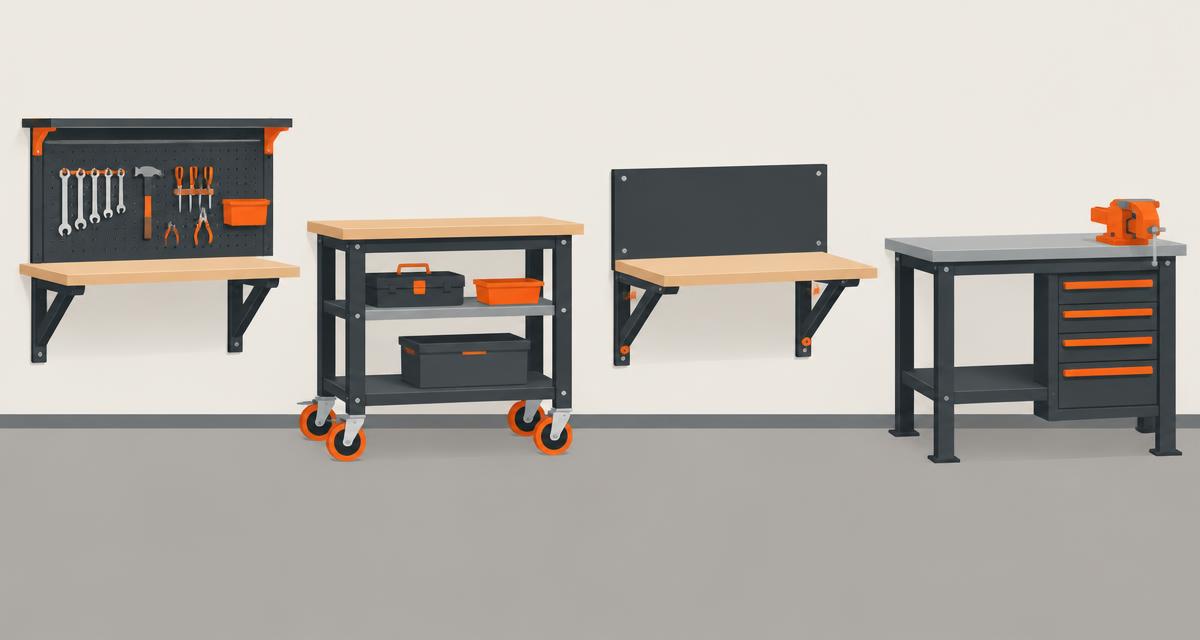
The best garage workbench is sturdy, flat and the right height for you. Pick the style that fits your space: a wall bench for most garages, a rolling or fold-down bench for tight spaces and a steel bench for car work.
Below are seven bench ideas, plus tips on height, tops, vises, power and whether to build or buy.
| Bench type | Cost level | Space use | Best for | Skill to build |
|---|---|---|---|---|
| Wall bench | Low | Wall | Most garages | Beginner |
| Rolling bench | Medium | Floor, mobile | Shared garages | Beginner to Intermediate |
| Fold-down bench | Low | Wall when closed | Small garages | Beginner |
| Bench with storage | Medium | Floor | Tool-heavy shops | Intermediate |
| Outfeed table | Medium | Floor | Table saw users | Intermediate |
| Mechanic bench | Medium to High | Floor | Car and bike work | Buy or weld |
| Corner bench | Low to Medium | Corner | Using dead space | Intermediate |
Garage workbench ideas
Start with the space you have and the work you do most.
Wall bench
A wall bench is fixed to the wall studs and legs. It is stable and leaves room above for pegboard or shelves. This is the go-to for most garages.
Rolling bench
A rolling bench sits on locking casters. Roll it out to work and back to park the car. Pick heavy duty casters that lock firmly.
Fold-down bench
A fold-down bench hinges to the wall and drops flat when not in use. It suits small garages and light work.
Bench with storage
Add drawers, shelves or cabinets under the top. Heavy storage also makes the bench more solid.
Outfeed table
An outfeed table sits behind a table saw at the same height. It supports long boards and doubles as an assembly bench.
Mechanic bench
A mechanic bench has a steel top and drawers. It handles oil, heavy parts and a big vise for car and bike work.
Corner bench
An L-shaped bench uses a corner that often goes to waste. It gives you two work areas in one spot.
Height and depth tips
There is no perfect number for everyone. Set the height so you can work without hunching or lifting your shoulders.
A simple test: stand straight with arms relaxed. Many people like a bench near the height of their wrist or palm. Go a bit lower for hand planing and heavy work. Go a bit higher for fine detail work.
For depth, make sure you can reach the back without leaning far. Deeper benches hold big projects but are harder to reach across.
Top materials
- Plywood: low cost and easy to replace. Double it up for strength.
- MDF over plywood: very flat and smooth. Seal it so it does not soak up spills.
- Butcher block or hardwood: strong, good looking and easy to sand and refinish.
- Steel: best for mechanics and welding. Handles oil and heat.
- Hardboard layer: a cheap top layer you can swap out when worn.
Vise and power
A vise holds work steady so you can cut, file or drill safely. Woodworkers use a face or end vise. Mechanics use a heavy bench vise bolted near a leg.
Add power right at the bench. A power strip mounted under the top edge keeps cords off the work. For new outlets or circuits, follow local codes and use a licensed electrician.
Good light over the bench matters too. See garage lighting ideas.
Build vs buy
Build
Building lets you set the exact size, height and storage. A basic 2x4 and plywood bench is a great first project.
Buy
Buying is faster and good for steel benches with drawers. Check the weight rating, top thickness and leg bracing.
Tip: whatever you choose, make sure the bench does not rock. Level the legs or shim them.
Keep the bench clear
A bench only works when you can use the top. Clutter builds up fast, so plan storage from day one.
Hang the tools you use most on pegboard or french cleats right above the bench. Put a shelf under the top for bins and cases. Keep a small trash can and a brush within reach.
Tip: clear the top at the end of every session. Five minutes of cleanup makes the next project start faster.
Keep it comfortable
Put an anti-fatigue mat in front of the bench. Keep the bench area warm in winter so glue and finish cure well. See how to heat a garage.
Plan the rest of your shop with our garage workshop ideas or browse more garage hobbies.
Frequently asked questions
What is the best workbench for a small garage?
A fold-down or rolling bench works best in a small garage. Both free up floor space when you need to park.
How tall should a garage workbench be?
Set it so you can work without hunching. Many people like a height near their wrist or palm. Go lower for heavy work and higher for detail work.
What is the best top for a workbench?
Plywood or butcher block works well for woodworking. Steel is best for mechanic work, oil and welding.
Should I build or buy a garage workbench?
Build if you want a custom size and storage. Buy if you want it fast or need a steel bench with drawers.
Related guides
- Garage Workshop Ideas: Layout, Storage and SetupLayout zones, workbenches, tool storage, power and dust control.
- Garage Lighting Ideas for a Brighter, Better SpaceShop lights, hex grids, task lights and how to plan light by zone.
- How to Heat a Garage for Year-Round HobbiesInsulate first, then compare heaters, mini splits and cooling options.
- Garage Hobbies: 25 Ideas25 things you can do in your garage.