Garage Gym Flooring: Best Options for Your Home Gym
By Garage Hobbies TeamLast updated: October 2026
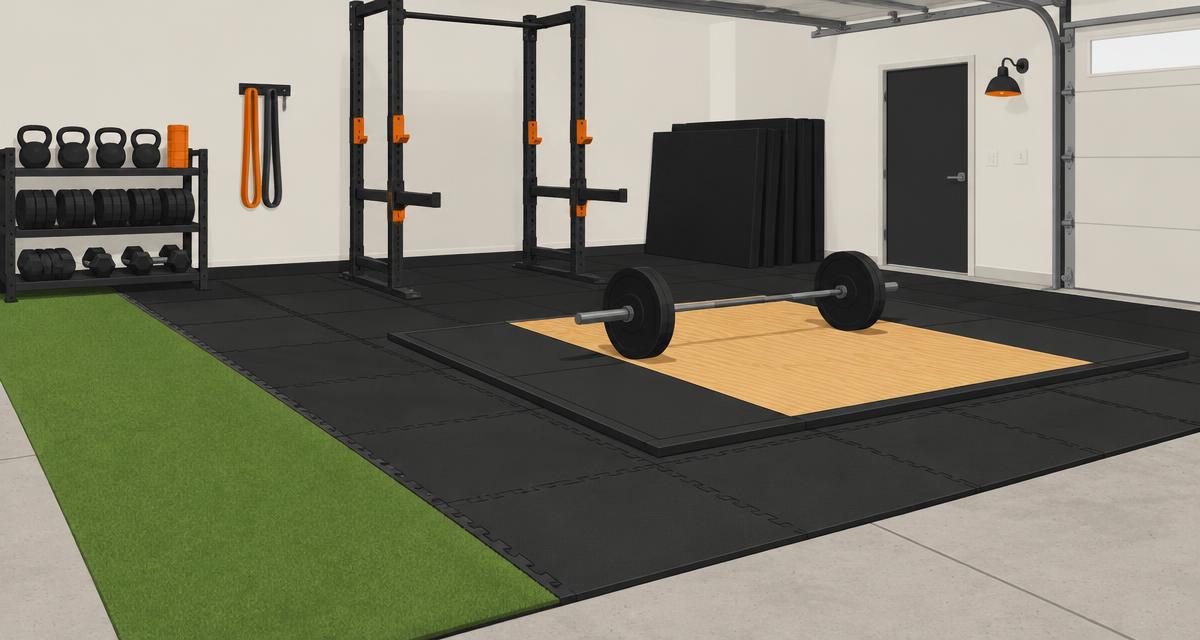
The best garage gym flooring for most people is rubber. Rubber tiles, horse stall mats and rolled rubber all protect the slab, absorb impact and give you good grip.
Foam works for light workouts and stretching. Turf is great for sled pushes. Pick based on how you train, then lay it before you bring in your gear.
| Flooring | Cost level | Best for | DIY ease | Downside |
|---|---|---|---|---|
| Rubber tiles | Medium | All-around training | Easy | Seams can shift |
| Horse stall mats | Low to Medium | Heavy lifting | Medium, mats are heavy | Strong smell at first |
| Rolled rubber | Medium | Clean look, few seams | Hard alone | Heavy rolls to handle |
| Foam tiles | Low | Stretching, kids, light cardio | Very easy | Dents under heavy weight |
| Turf | Medium | Sled pushes, mobility | Easy | Not for heavy drops |
Why bare concrete is not enough
Concrete is hard, cold and unforgiving. A dropped plate can chip the slab and damage your weights.
It is also tough on your knees and back during jumps and cardio. And it gets slick when it is dusty or damp.
A good gym floor fixes all of that. It adds grip, cushion and a little warmth underfoot.
Garage gym flooring types
Each option has a clear job. Many garage gyms mix two or three.
Rubber tiles
Rubber tiles are square pieces that lock together like a puzzle. They are easy to carry, cut and replace.
They work well for most training styles. Seams can shift a bit over time, so press them tight when you lay them.
Horse stall mats
Stall mats are thick, dense rubber mats made for barns. They are a popular low cost choice for lifting areas.
They are heavy, so get help moving them. Expect a rubber smell for a while.
Rolled rubber
Rolled rubber comes in long sheets. It gives you fewer seams and a clean, pro gym look.
Rolls are very heavy and harder to cut straight. This is a two-person job.
Foam tiles
Foam tiles are soft, light and cheap. They are good for yoga, stretching, bodyweight work and kids.
They dent under racks and heavy weights. Skip them in the lifting area.
Turf
Gym turf is a short artificial grass. It is made for sled pushes, drags, crawls and mobility work.
Lay it on top of rubber or in its own lane. It is not built for dropped barbells.
Thickness by training style
Match the thickness to the heaviest thing you do. When in doubt, go thicker in the lifting zone.
Heavy lifting
Use the thickest rubber you can, like stall mats. Add a lifting platform if you drop weights or deadlift heavy.
Cardio
Thinner rubber tiles or a machine mat are enough under a bike, rower or treadmill. They catch sweat and cut vibration.
General fitness
Medium thickness rubber tiles cover dumbbells, kettlebells and circuit work. Add foam in a stretch corner.
How to prep and lay it
Good prep makes the floor last longer and lie flat.
- Clear the area and sweep the slab well.
- Clean oil spots so the rubber does not slide or stain.
- Check for cracks and high spots. Patch where needed.
- Start at the back wall and work toward the door.
- Press seams tight and keep rows straight.
- Cut edges with a sharp utility knife and a straight edge. Make several light passes.
- Let rubber relax flat for a day before you put heavy gear on it.
Tip: mark your gym zone first so you know exactly how much flooring you need.
Lifting platform
A lifting platform is a raised base made of plywood with rubber on each side. You stand on the wood and the plates land on the rubber.
It spreads the load, protects the slab and cuts noise. Build one if you deadlift heavy or do Olympic lifts. You can also buy one ready-made.
Cleaning and smell
Sweep or vacuum often. Wipe up sweat and chalk with a damp mop and a mild cleaner made for rubber.
Avoid harsh solvents and oil-based cleaners. They can break down rubber.
New rubber often smells strong. Air it out in the sun or in an open garage before you lay it. Good airflow helps the smell fade faster.
Moisture and cold floors
Garage slabs can hold moisture. Tape a square of plastic to the floor for a day or two. If the underside is wet, you have a moisture issue.
Fix drainage and leaks first. A sealer or vapor barrier may help. For bigger water problems, talk to a pro.
Rubber adds some warmth, but a cold slab still pulls heat. Insulating the garage helps most. See how to heat a garage.
Short on room? See half garage gym ideas. For the full plan, read our garage gym ideas guide or browse more garage hobbies.
Frequently asked questions
What is the best flooring for a garage gym?
Rubber is the best choice for most garage gyms. Rubber tiles, horse stall mats and rolled rubber all protect the slab and give good grip.
Are horse stall mats good for a garage gym?
Yes. Stall mats are thick and tough, which makes them a popular choice for lifting areas. They are heavy and smell at first, so air them out.
Can I use foam tiles in a garage gym?
Foam works for stretching, yoga and light cardio. It dents under racks and heavy weights, so use rubber in the lifting area.
Do I need a lifting platform?
You need one if you deadlift heavy or drop weights often. It spreads the load, protects the slab and reduces noise.
How do I get rid of the rubber smell?
Air the flooring out in an open space before you lay it, clean it with a mild cleaner and keep the garage well ventilated.
Related guides
- Garage Gym Ideas: How to Build a Home Gym in Your GaragePlan the space, pick the floor and gear, and build a gym you will use.
- Half Garage Gym Ideas: Train and Still Park Your CarFolding racks, wall storage and smart layouts so the car still fits.
- How to Heat a Garage for Year-Round HobbiesInsulate first, then compare heaters, mini splits and cooling options.
- Garage Hobbies: 25 Ideas25 things you can do in your garage.