Affiliate disclosure: We may earn a commission from links on this page at no extra cost to you.
Best Home Gym Flooring for Garage Workouts
Grytfit is our value all-rubber tile option. Choose VEVOR rubber-top EVA tiles for light mixed workouts or BalanceFrom foam for stretching only. Stall mats and Regupol Aktiv remain options for firmer lifting and larger-area coverage.
Last updated: October 2026By Garage Hobbies Team
Quick comparison
| Product / Best for / Key spec | Best for | Key spec | Price |
|---|---|---|---|
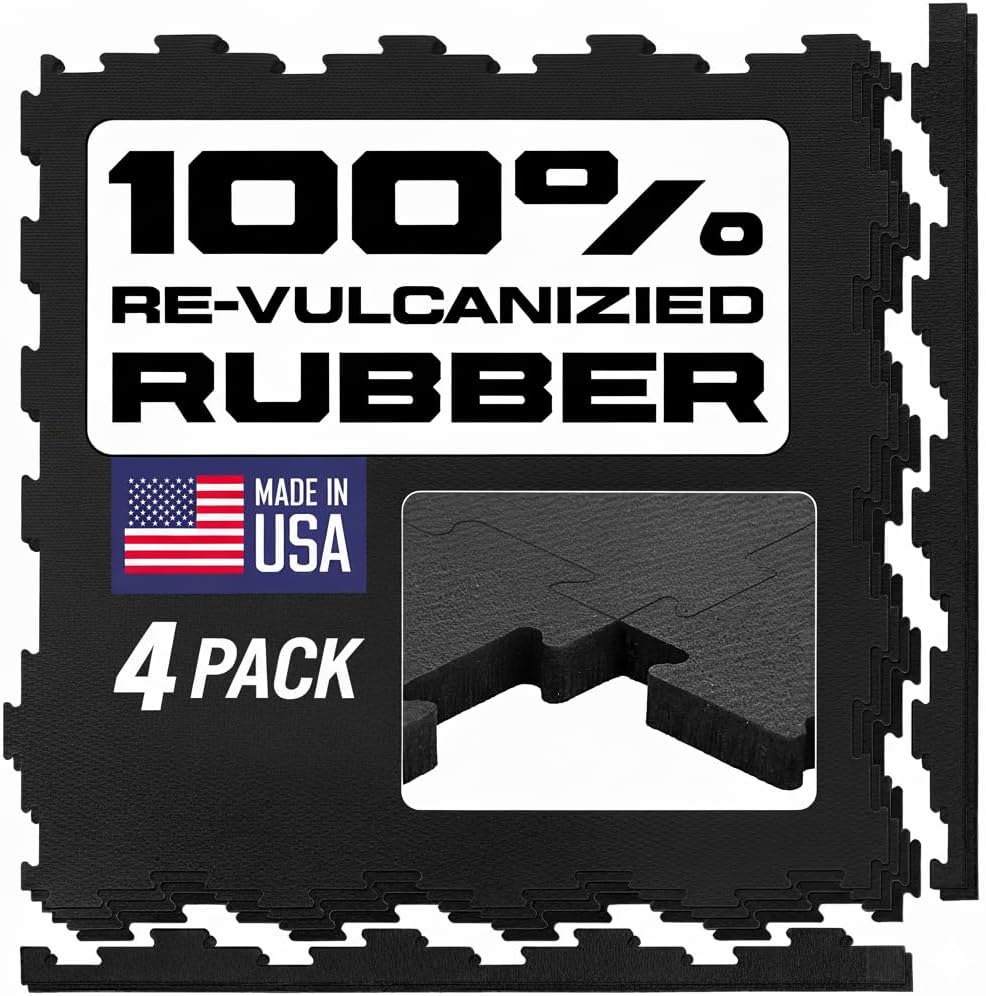 Grytfit Heavy Duty 100% Rubber Interlocking Floor Tiles | Best forAn all-rubber tiled zone | Key spec100% rubber | $104.99on Amazon (4-pack) |
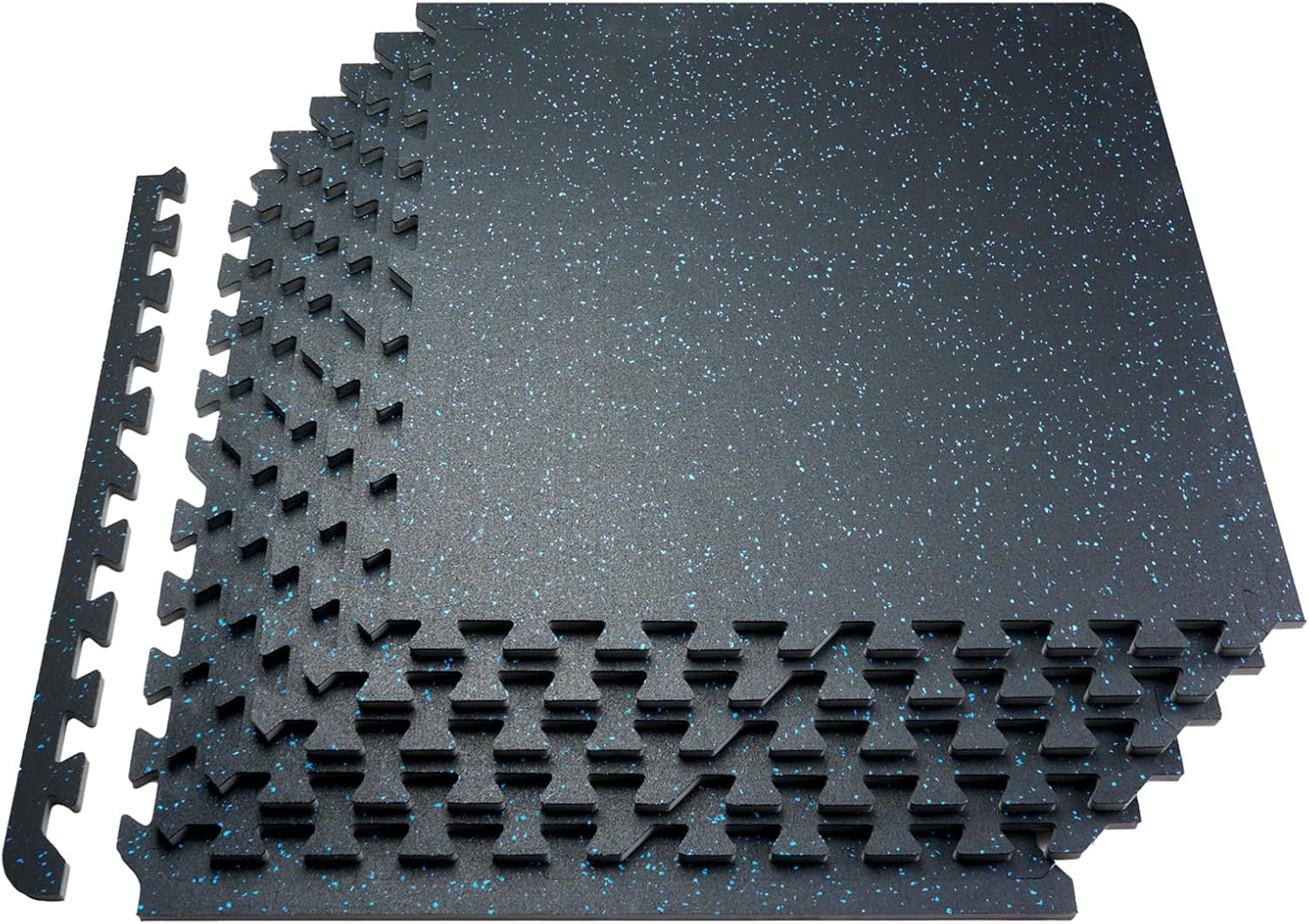 VEVOR 0.56-inch Rubber-Top High-Density EVA Gym Flooring Tiles, 6 Tiles | Best forA light mixed-workout zone | Key spec0.56-inch total thickness | $54.99on Amazon |
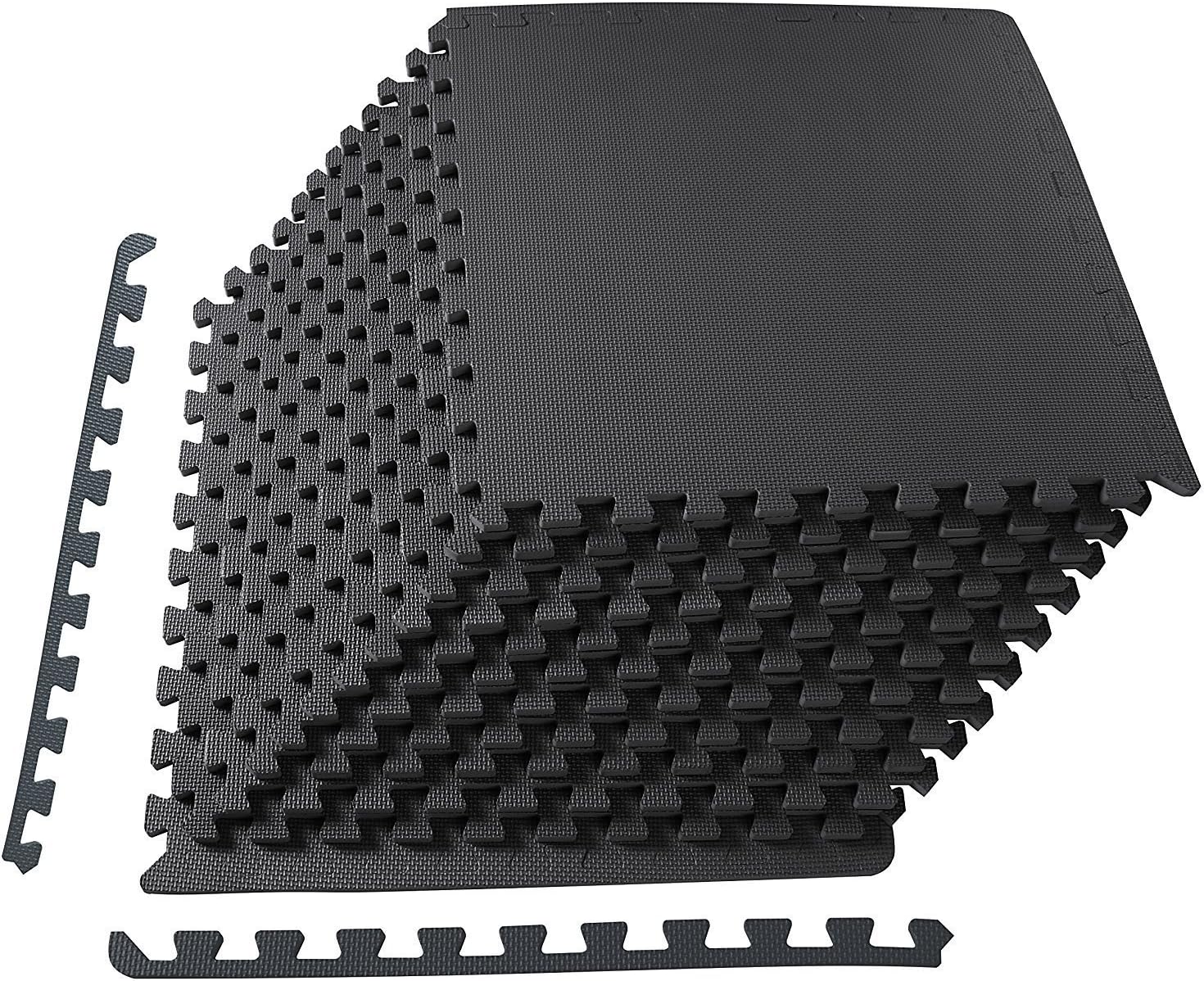 BalanceFrom 24 x 24-inch EVA Interlocking Foam Exercise Tile Mat | Best forLight workouts and stretching | Key spec24 x 24-inch tiles | $39.99on Amazon (1/2 in, 12 tiles) |
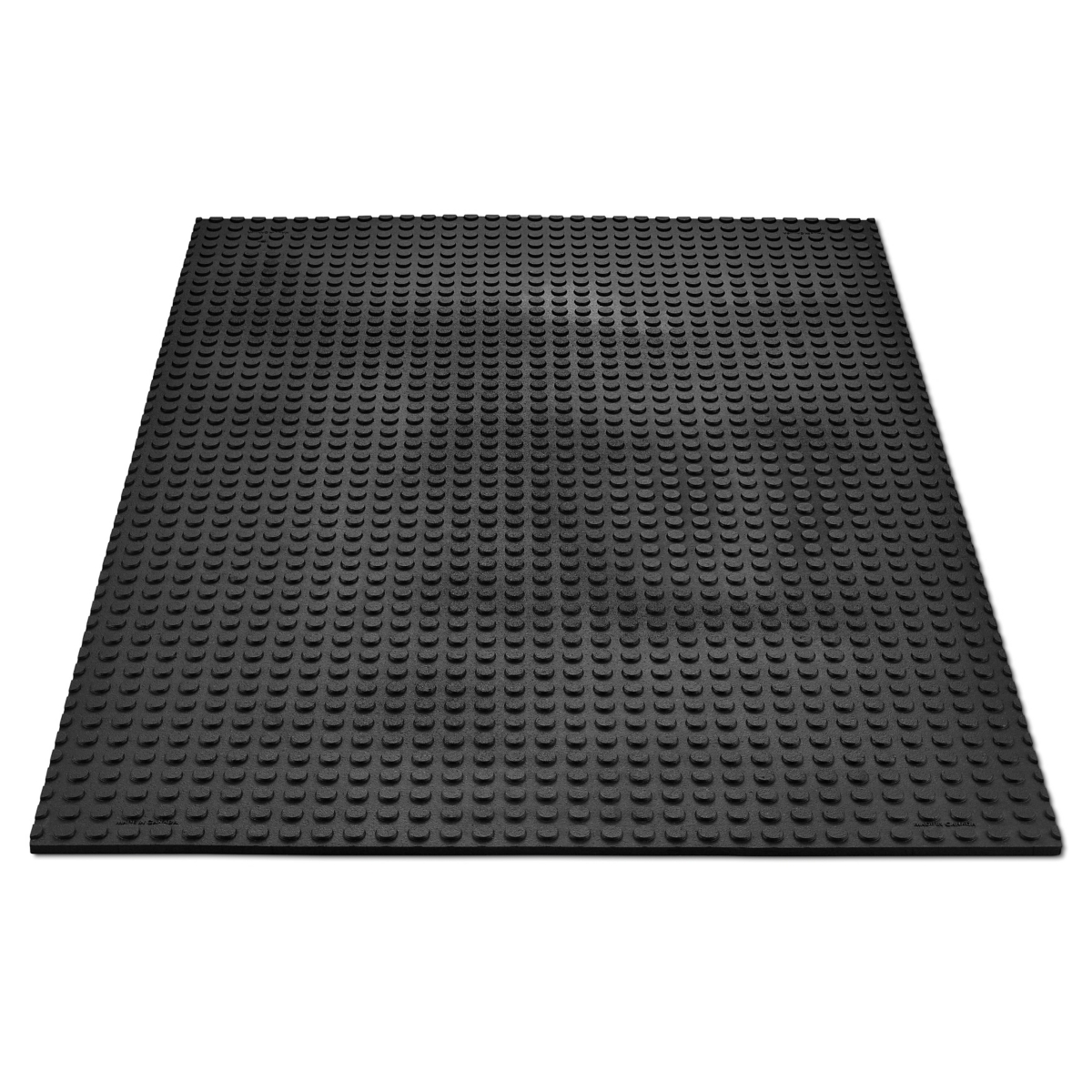 Tractor Supply 4 ft. x 6 ft. x 3/4 in. Rubber Stall Mat | Best forA small lifting area on a firm slab | Key spec3/4-inch rubber, 4 x 6 ft. | $63.99at Tractor Supply |
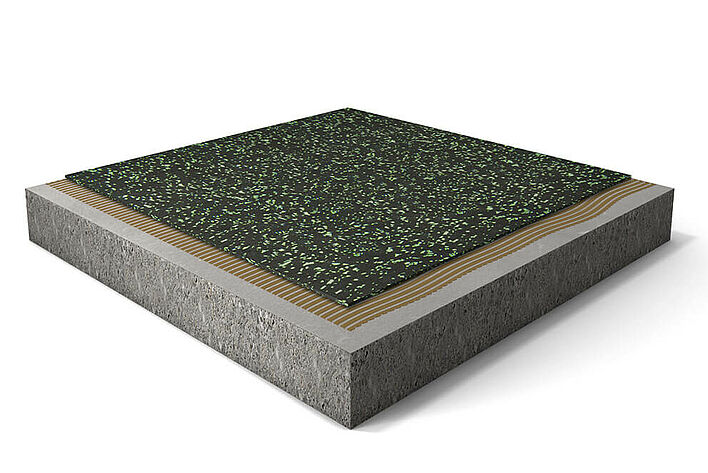 Regupol Aktiv | Best forLarger cardio and strength zones | Key spec3/8-inch option |
Prices checked October 15, 2026. Prices change, check the retailer for the current price.
Our picks
Best value rubber tiles
1. Grytfit Heavy Duty 100% Rubber Interlocking Floor Tiles
Grytfit suits home gyms that want all-rubber flooring in a modular layout. The interlocking tiles let you build a workout zone and replace sections instead of a whole roll. Tile joints leave more seams to clean than rolled rubber.
Key specs
- 100% rubber
- Interlocking tiles
- Heavy-duty rubber flooring
Pros
- All-rubber construction
- Interlocking layout
- Replaceable tile sections
Cons
- More seams than rolled rubber
- Rubber sections are heavier to handle than foam
- Heavy drops still call for a dedicated platform
$104.99 on Amazon (4-pack)
Check price on AmazonBest budget mixed-surface tiles
2. VEVOR 0.56-inch Rubber-Top High-Density EVA Gym Flooring Tiles, 6 Tiles
VEVOR suits budget gyms used for light strength work and floor exercises. The rubber top adds a wear surface over high-density EVA foam, with six tiles covering 24 square feet. The foam base can compress under heavy equipment and is not for heavy drops.
Key specs
- 0.56-inch total thickness
- Rubber top with high-density EVA foam
- Six tiles covering 24 sq. ft.
Pros
- Rubber wear surface over foam
- Six-tile pack covers 24 sq. ft.
- Low upfront cost
Cons
- Not solid rubber through the thickness
- Not for heavy drops
- Foam base can compress under equipment
$54.99 on Amazon
Check price on AmazonBest budget stretching mat
3. BalanceFrom 24 x 24-inch EVA Interlocking Foam Exercise Tile Mat
BalanceFrom EVA tiles suit stretching and light bodyweight workouts on a budget. The interlocking 24-by-24-inch tiles let you build a separate floor-exercise zone. Soft foam is not a stable base for a loaded rack or heavy dropped weights.
Key specs
- 24 x 24-inch tiles
- EVA foam
- Interlocking exercise mat
Pros
- Interlocking format
- Cushioning for stretching and light workouts
- Low upfront cost
Cons
- Not for heavy drops
- Not a base for a loaded rack
- Foam can dent under heavy equipment
$39.99 on Amazon (1/2 in, 12 tiles)
Check price on AmazonBest budget lifting mat
4. Tractor Supply 4 ft. x 6 ft. x 3/4 in. Rubber Stall Mat
This thick stall mat is a practical budget alternative to fitness-branded flooring. It suits a small lifting zone where you can handle heavy sections. Inspect the surface, edges and odor before bringing it into an enclosed garage. Agricultural mats are not a certified noise-control system.
Key specs
- 4-foot by 6-foot mat
- 3/4-inch thickness
- Heavy rubber construction
Pros
- Thick surface at a lower cost
- Loose-laid sections can be replaced
- Useful beneath a lifting platform
Cons
- Heavy to carry and cut
- Rubber odor may be noticeable
- Edges and finish can vary
$63.99 at Tractor Supply
View at Tractor SupplyBest rolled rubber
5. Regupol Aktiv
Aktiv rolls reduce the number of seams across a larger gym. The 3/8-inch option is a starting point for general equipment and controlled strength work. Choose the exact thickness and installation method with the supplier. Heavy rolls can be awkward in a garage with parked cars and little staging space.
Key specs
- Recycled rubber fitness flooring
- Multiple thickness and format options
- 3/8-inch configuration available
Pros
- Fewer seams than small tiles
- Broad area coverage
- Several thickness choices
Cons
- Large rolls need careful handling
- Permanent installation needs slab prep
- Not a dedicated heavy-drop platform
Rubber tiles, stall mats, rolls, foam or turf?
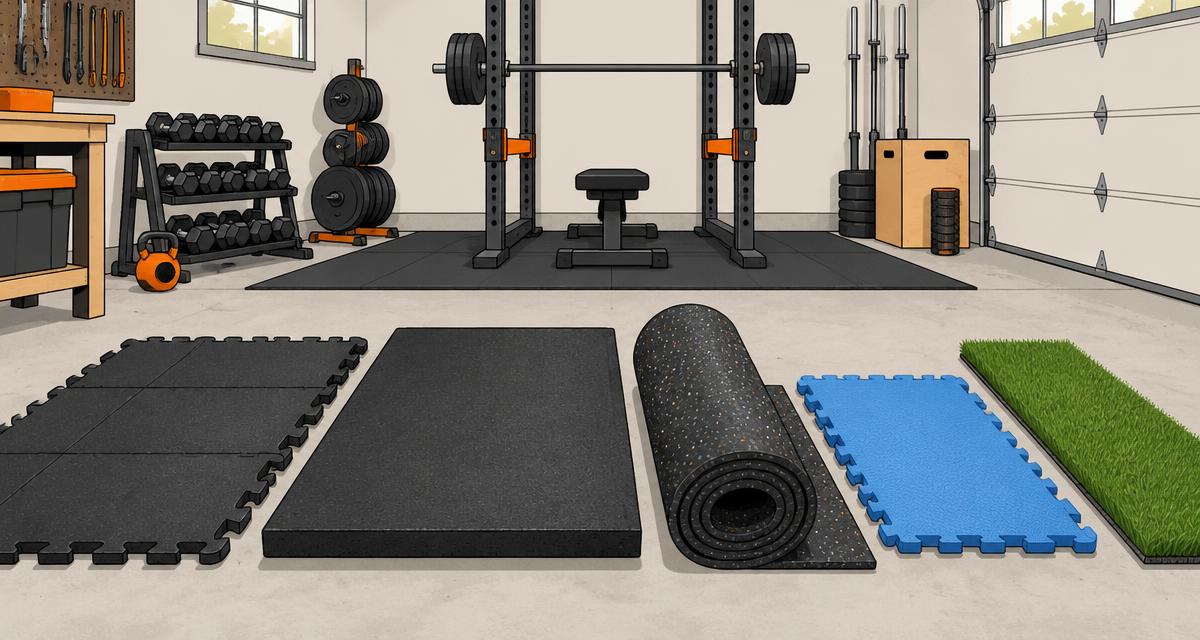
Choose the surface for the exercise first. Rubber tiles suit a mixed strength zone and are easier to replace in sections. Stall mats trade a refined finish for thick, budget-friendly coverage. Rolled rubber suits larger areas with fewer joins.
Foam is for floor comfort, not heavy lifting. Turf works as a separate sled or movement lane. The best garage gym flooring can be a mix of surfaces rather than one material across the whole garage.
Check the listing for exact tile thickness, pack coverage and permitted lifting use before you buy.
- Tiles: removable sections and a defined footprint.
- Stall mats: thick rubber with heavy handling and possible odor.
- Rolls: wide coverage with more installation work.
- Foam: mobility and light exercise only.
- Turf: a secured lane, not the place to drop a barbell.
How thick should flooring be for deadlifts?
Start around 3/8 inch for general equipment and controlled strength work. For a dedicated deadlift zone, consider roughly 3/4-inch rubber or a designed lifting platform with suitable impact pads. Those are shopping starting points, not guarantees against concrete damage.
Dropped load, bumper plates, drop height, slab condition and the floor system all matter. Lower the bar under control. Repeated heavy drops may need a purpose-built platform and structural advice. Thick soft foam is not equivalent to dense rubber.
- Check the manufacturer's permitted lifting use.
- Keep the rack on a firm, even surface.
- Use impact pads where appropriate, without blocking walkways.
- Check door and threshold clearance after adding thickness.
Check concrete moisture before covering the slab
Start with a clean, dry and level slab. Loose-laid rubber can trap moisture beneath it, while glued flooring needs the adhesive maker's moisture limits. A plastic-sheet screen can show a possible problem but does not replace the required quantitative test.
Resolve active water entry before laying mats. Follow the flooring and adhesive instructions for testing, vapor control and compatible finishes. Do not assume a garage coating solves every moisture issue or that rubber will adhere to it.
- Inspect underneath removable mats periodically.
- Avoid covering oily, flaking or damp concrete.
- Let new concrete meet the specified cure and moisture requirements.
- Follow local codes and use a licensed pro for structural repairs or ventilation changes.
Plan edges, parking and winter conditions
Keep gym flooring out of tire paths unless the exact product permits vehicle use. Most fitness flooring is not a garage parking surface. Hot tires, oil and water add risks that a gym tile may not be designed to handle.
Measure the rack, bench and walking lanes before ordering. Account for mat thickness under folding racks and doors. Check installation temperature, rubber odor and ventilation needs in a garage that is closed through winter.
- Secure or finish exposed edges to reduce trips.
- Allow the expansion gap the maker requires.
- Keep outlets, drains and exits accessible.
- Budget for installation as well as the flooring itself.
Frequently asked questions
What is the best home gym flooring?
Grytfit is our value all-rubber tile pick for a modular workout zone. Stall mats suit a budget lifting area, while Regupol Aktiv rolls reduce seams across a larger gym. VEVOR rubber-top EVA and BalanceFrom foam suit light workouts, not heavy drops.
Are horse stall mats good for a garage gym?
They can work on a firm, level slab. Check thickness, surface finish, odor and edge fit. They are heavy agricultural mats, not proof of a tested fitness or acoustic rating.
Is 3/4-inch rubber enough for deadlifts?
It is a common starting thickness for a lifting zone, but no thickness alone guarantees slab protection. Use controlled lowering and consider a designed platform or impact pads for heavy drops.
Can I put a power rack on foam tiles?
Avoid soft foam under a loaded rack. Compression can affect stability. Use a firm base and follow the rack's mounting instructions.
Can I park a car on gym flooring?
Only if the exact flooring maker allows vehicle use. Gym rubber, foam and turf should normally stay separate from the parking bay.
Do rubber mats need a moisture barrier?
It depends on the slab and floor system. Follow the manufacturer's moisture testing and vapor-control instructions rather than adding an unapproved plastic layer.
Related buying guides
- Best Garage Floor Epoxy and Flooring AlternativesRust-Oleum EpoxyShield is our starting pick for a DIY two-part epoxy floor. Choose ArmorPoxy ArmorClad for a higher-build system, or VEVOR tiles when you want a cheap removable surface.
- Best Power Rack for a Home Garage GymFLYBIRD SR1 is our value squat-rack option, while Mikolo adds cable crossover and LAT pull-down functions. Compare REP PR-4000 for low ceilings, Titan T-3 for a full cage or Rogue RML-3W for folding wall storage.
- Best Home Gym Equipment for a Garage SetupStart with a rack, bench and adjustable weights. FLYBIRD SR1, WB5 and its dumbbell pair are value options; BalanceFrom offers a multifunctional machine. REP PR-4000 anchors a dedicated strength setup, while MERACH Q1S adds budget magnetic rowing.