Affiliate disclosure: We may earn a commission from links on this page at no extra cost to you.
Best Garage Heater for Your Hobby Space
InoKraft 7500W is our value electric option for a suitable 240V supply. Kismile provides spot warmth for a person at a bench, while Fahrenheat FUH54 and Mr. Heater suit fixed installations. The InoKraft kerosene heater is never for a closed garage.
Last updated: October 2026By Garage Hobbies Team
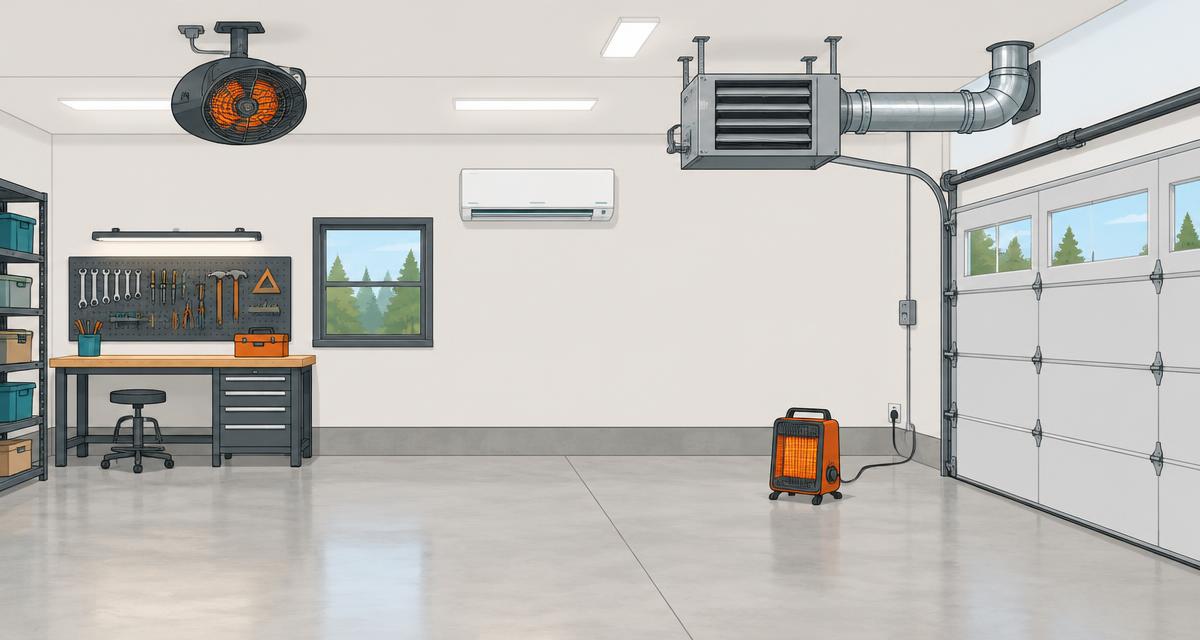
Quick comparison
| Product / Best for / Key spec | Best for | Key spec | Price |
|---|---|---|---|
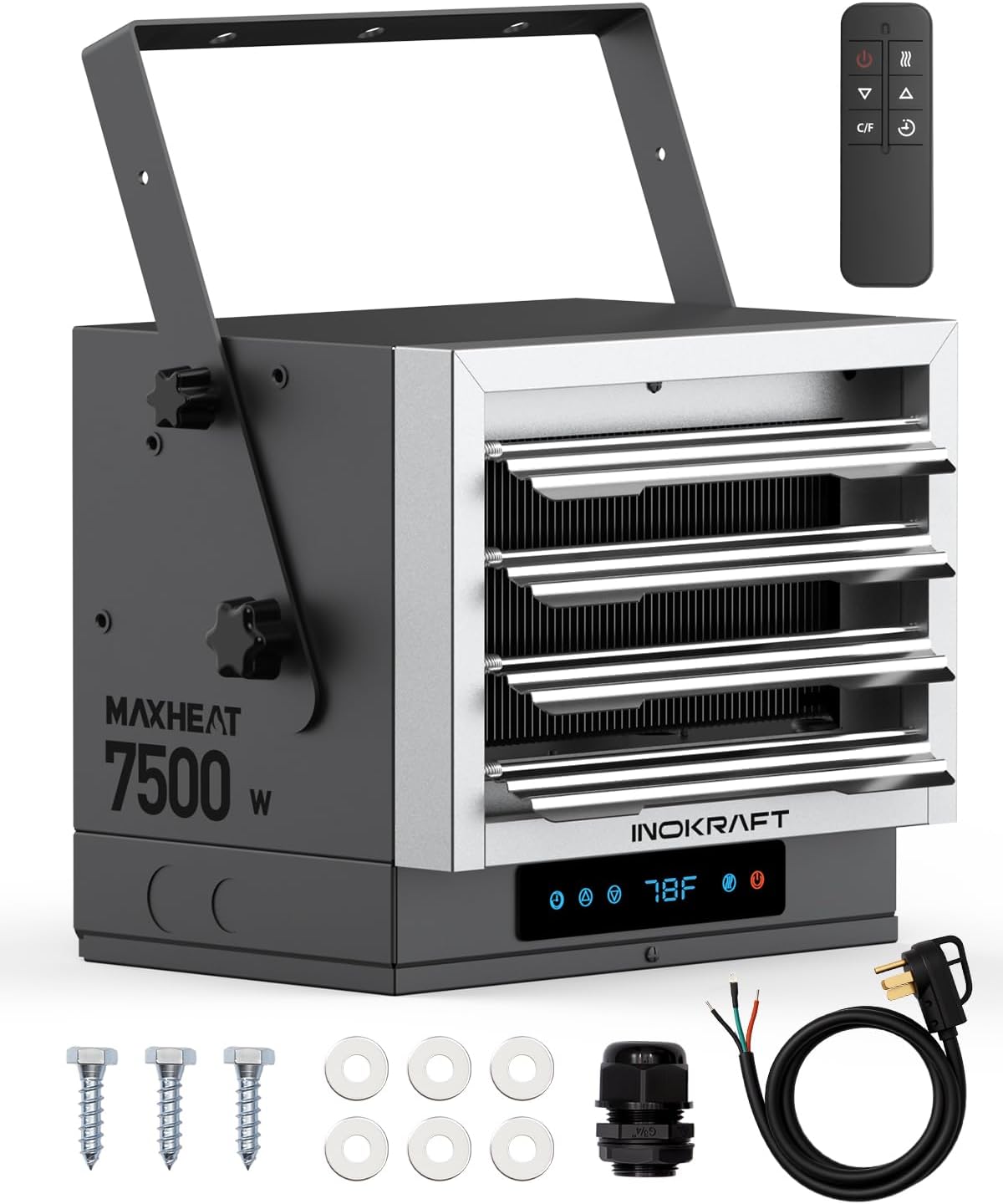 InoKraft 7500W 240V Electric Garage Heater with NEMA 14-50P Plug | Best forA professionally checked 240V setup | Key spec7,500W electric heat | $227.99on Amazon |
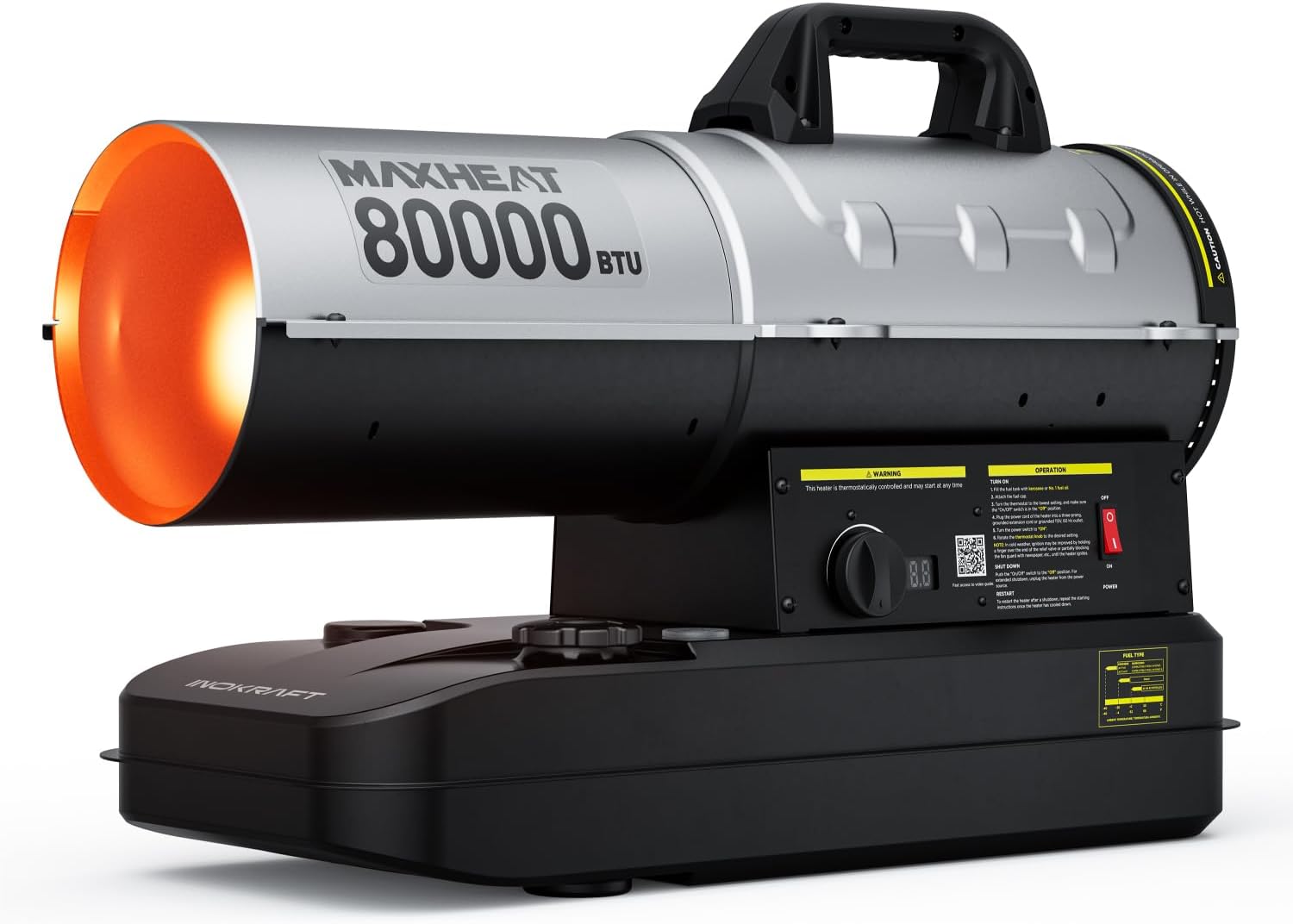 InoKraft 80,000 BTU Kerosene Forced Air Heater | Best forPermitted ventilated work sites, not closed garages | Key spec80,000 BTU | $279.99on Amazon |
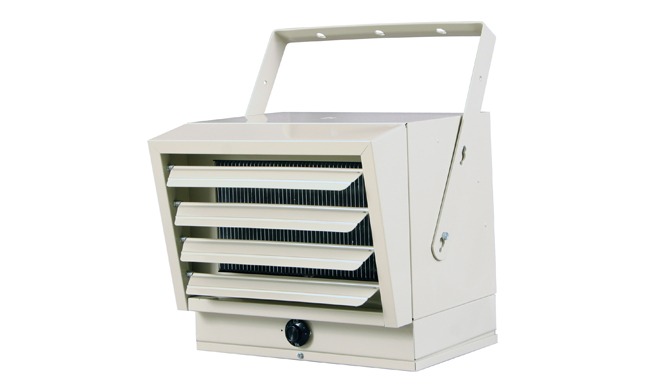 Fahrenheat FUH54 | Best forAn insulated 240V garage | Key specUp to 5,000W at 240V | |
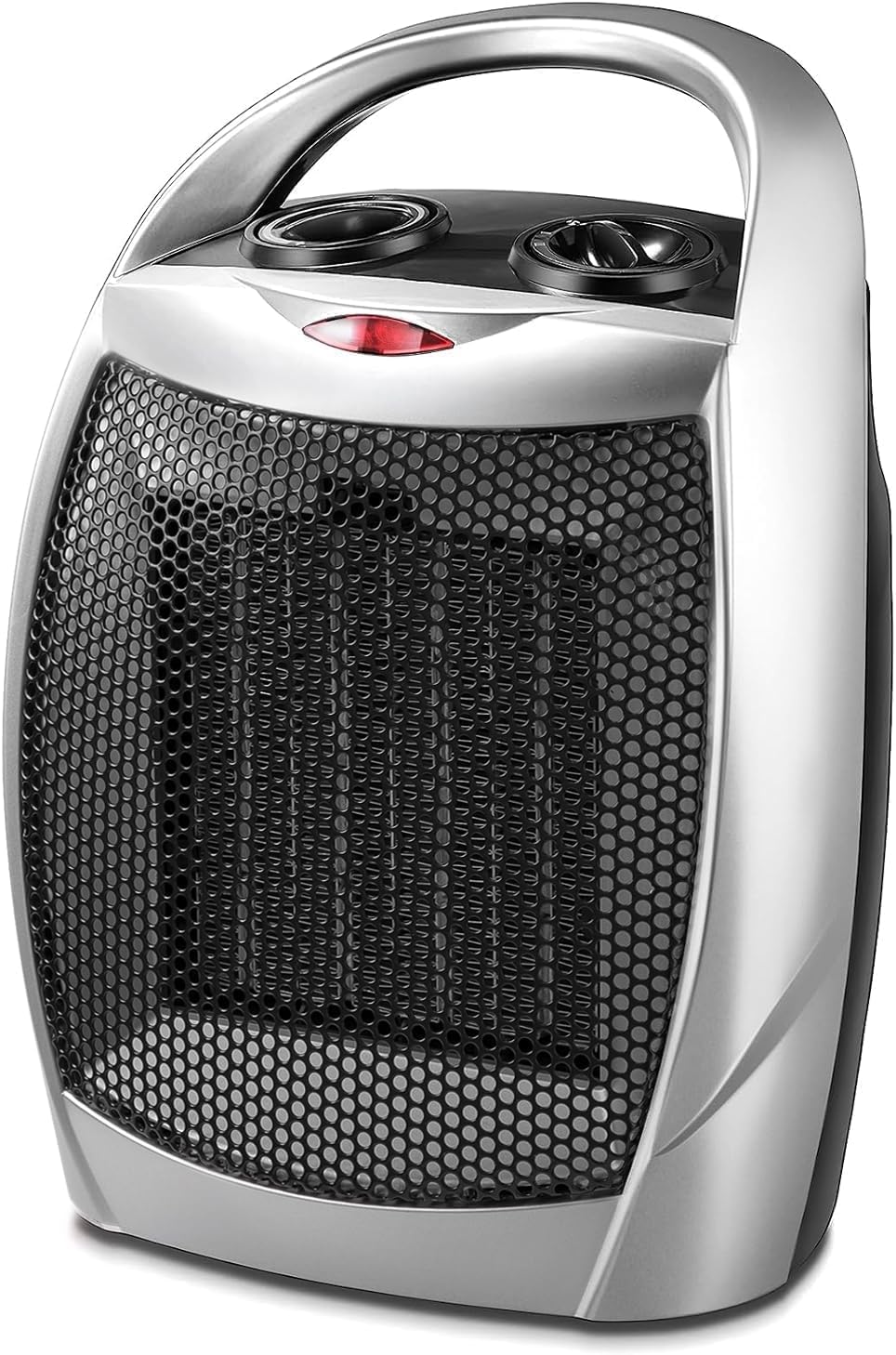 Kismile Small Electric Ceramic Space Heater with Adjustable Thermostat | Best forSpot heat for a person at a bench | Key specCeramic heat; adjustable thermostat | $24.99on Amazon |
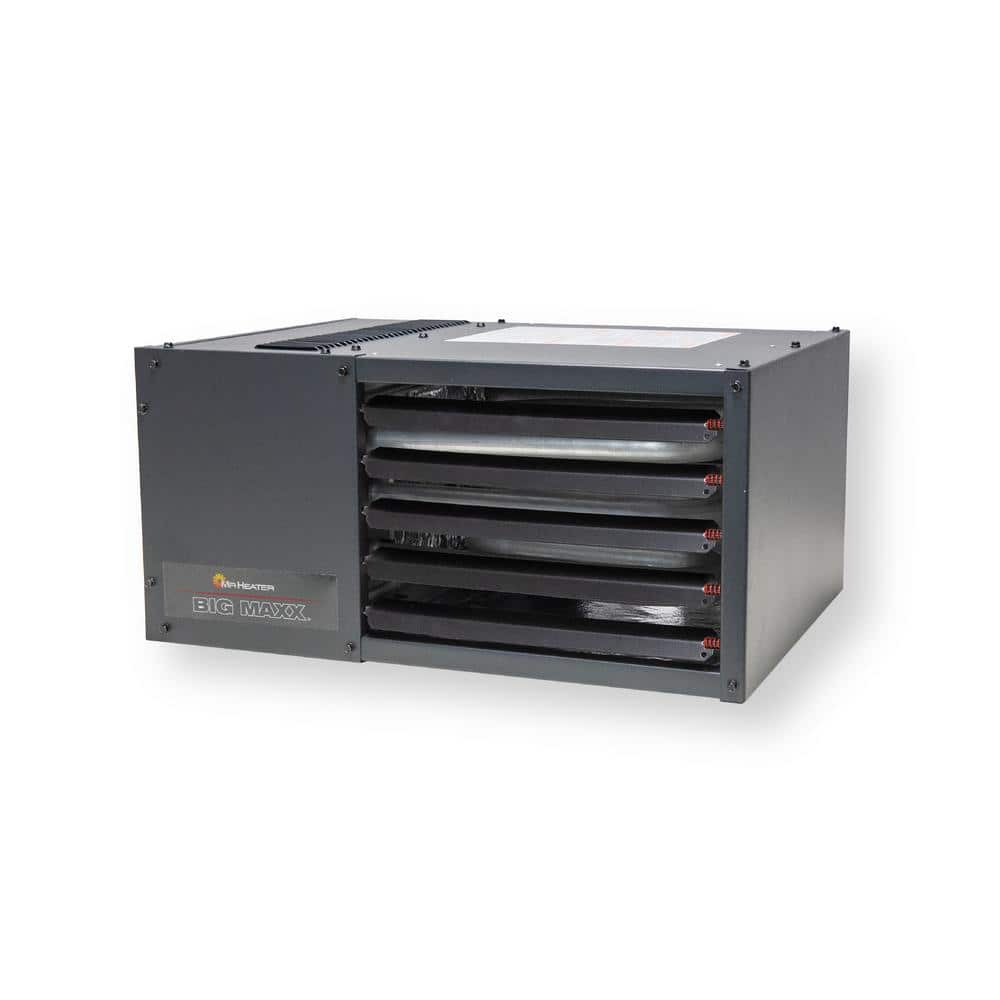 Mr. Heater Big Maxx MHU50 | Best forA compatible vented gas installation | Key spec50,000 BTU/hr input | $452.79at Home Depot (natural gas model MHU50NG) |
Prices checked October 15, 2026. Prices change, check the retailer for the current price.
Our picks
Best value high-output electric
1. InoKraft 7500W 240V Electric Garage Heater with NEMA 14-50P Plug
The InoKraft 7500W heater suits garages with a suitable 240V supply that need more output than a typical household plug-in heater. It delivers electric warmth without combustion exhaust and comes with a NEMA 14-50P plug. It needs a correctly sized circuit, so follow local codes and use a licensed electrician for the connection.
Key specs
- 7,500W
- 240V supply
- NEMA 14-50P plug
Pros
- Higher output than typical 120V heaters
- Electric heat without combustion exhaust
- NEMA 14-50P plug
Cons
- Needs a suitable 240V circuit
- Electrical installation adds to the project cost
- High output increases power demand
$227.99 on Amazon
Check price on AmazonBest for approved ventilated work areas only
2. InoKraft 80,000 BTU Kerosene Forced Air Heater
The InoKraft kerosene heater suits permitted, ventilated work areas that need forced-air heat. Its 80,000 BTU rating makes it a high-output option, but combustion brings carbon monoxide and fire risks. Never use it in a closed garage; follow local codes and use a licensed pro for ventilation planning.
Key specs
- 80,000 BTU
- Kerosene fuel
- Forced-air heater
Pros
- High-output forced-air heat
- Fuel-based option for permitted work areas
Cons
- Never for a closed garage
- Needs ventilation and carbon monoxide protection
- Fuel storage and handling add work
$279.99 on Amazon
Check price on AmazonBest overall electric
3. Fahrenheat FUH54
The FUH54 is a ceiling-mounted forced-air heater that keeps the floor open for tools or training. Adjustable louvers help direct warmth toward a work zone. Have an electrician match the circuit and mounting to the exact manual.
Key specs
- 208V or 240V electric
- Up to 5,000W at 240V
- Ceiling bracket and adjustable louvers
Pros
- Keeps floor space clear
- No combustion vent needed
- Adjustable heat direction
Cons
- Not a standard 120V plug-in
- Professional electrical setup may be needed
- Fan moves dust and makes sound
Best small heater for a workbench
4. Kismile Small Electric Ceramic Space Heater with Adjustable Thermostat
This Kismile heater suits a person working at a bench who wants local warmth on a budget. Its ceramic heating and adjustable thermostat make it a spot-heat option, not a whole-garage heater. Plug it directly into the wall and keep it clear of dust, fuel, water and other hazards.
Key specs
- Small electric ceramic heater
- Adjustable thermostat
Pros
- Local warmth for a bench user
- Adjustable thermostat
- Low upfront cost
Cons
- Not for whole-garage heating
- Needs a direct wall connection
- Hot surfaces need clear space
$24.99 on Amazon
Check price on AmazonBest gas-to-propane option
5. Mr. Heater Big Maxx MHU50
The Big Maxx MHU50 is a natural-gas unit with a manufacturer-approved propane conversion option. Choose the fuel setup with a licensed installer, not by swapping parts yourself. It still needs a correctly designed exhaust vent and electrical supply.
Key specs
- 50,000 BTU/hr input
- Natural gas with approved LP conversion
- 115V supply for fan and controls
Pros
- Two supported fuel paths
- Keeps equipment off the floor
- Vented forced-air heat
Cons
- Venting is not optional
- Input may exceed a small garage's need
- Fuel conversion needs qualified installation
$452.79 at Home Depot (natural gas model MHU50NG)
View at Home Depot120V vs 240V garage heaters
Choose 120V for modest supplemental warmth where the manual permits it. Typical 1,500W heaters cannot overcome the heat loss of many uninsulated garages. A 240V unit can deliver more heat, but needs a correctly sized circuit and connection.
Watts measure electric heat output more usefully than a vague room-size claim. Gas input BTU ratings are not the same as delivered output. Include installation and running costs when comparing total costs. Follow local codes and use a licensed pro for electrical work.
Check the listing and installation manual for exact dimensions, clearances and connection requirements before you buy.
The Kismile ceramic heater is for a person at a bench, not a whole garage. Plug it directly into the wall, never a power strip or extension cord. Follow the manual for placement and clearances; follow local codes and use a licensed pro for electrical work.
- Never use an adapter to connect a 240V heater to a 120V outlet.
- Follow the exact cord, receptacle and circuit instructions.
- Do not use a power strip with a high-load heater.
- Do not share a heavily loaded circuit with large tools or gym machines.
Infrared vs forced air
Infrared heat warms people and surfaces in its path. It suits a fixed work or seating zone, but objects outside that path may stay cold. It still needs safe clearances and approved mounting.
Forced air circulates warm air through the room. It suits general gym or workshop comfort, although the fan can stir dust. Neither an electric heater nor a gas unit is automatically safe around combustible dust, fuel or solvent vapors.
- Gym: even room warmth often matters more than one hot spot.
- Seated hobby bench: directed heat may be useful if clearances allow.
- Woodworking or finishing: have the work environment assessed before choosing a heater.
Sizing by square feet without guessing
Use square footage as a starting measurement, not a universal heater rule. A 400-square-foot insulated garage and a 400-square-foot bare garage can have very different heat loss. Climate, ceiling height, door gaps and desired temperature all matter.
Measure length times width, then record ceiling height, insulation and your winter conditions. Compare those details with the maker's sizing guidance. For fixed gas or high-output electric equipment, ask an installer for a heat-loss calculation before buying.
Compare garage door insulation kits to insulate the door before sizing your heater.
- Seal the door perimeter and insulate suitable walls and ceilings first.
- High ceilings increase the space you need to warm.
- Opening the vehicle door repeatedly adds heat loss.
- Oversizing can waste energy and produce uncomfortable temperature swings.
Propane, natural gas and venting
Use a properly vented, garage-approved gas system installed for its exact fuel. Propane and natural gas need different supply and burner arrangements. Only use a manufacturer's approved conversion with a qualified installer.
Never use an unvented portable combustion heater to warm an enclosed garage. A carbon monoxide alarm is essential protection with combustion equipment, but it does not replace correct venting or fresh-air requirements. Follow local codes and use a licensed pro for gas, structural and ventilation work.
The InoKraft 80,000 BTU kerosene forced-air pick is not for a closed garage. Use it only in a location explicitly permitted by its manual with all required ventilation and clearances. Maintain carbon monoxide protection, and never treat an alarm or a partly open door as proof of adequate fresh air.
- Plan the exhaust route and combustion air before purchasing.
- Check residential mounting height and combustible clearances in the manual.
- Keep gasoline, paint, rags and dust away from heaters.
- Never run a vehicle engine to heat the garage.
Safe placement and everyday use
Place heat where you need it without blocking a door, vehicle route or exit. A ceiling unit saves floor space only if its mounting and clearance requirements fit. Keep cords away from rubber mats, water and moving equipment.
Follow the manual on unattended use and thermostat settings. Inspect plugs, connections and mounting regularly. Stop using any heater that trips breakers, smells unusual or shows damaged wiring.
- Keep children and pets away from hot surfaces.
- Never dry clothing or towels on a heater.
- Maintain smoke and carbon monoxide alarms as appropriate.
- A mini split may be worth comparing if you also need summer cooling.
Frequently asked questions
What is the best garage heater for most people?
InoKraft 7500W is our value electric pick when a licensed electrician confirms the 240V setup. Fahrenheat FUH54 remains an electric alternative. Match either to heat loss and the exact installation manual.
What is the best electric garage heater on 120V?
Kismile is our small workbench-heater pick for spot warmth around a person, not for heating a whole garage. Plug it directly into a wall outlet and keep combustible materials away. Follow its manual for permitted locations and clearances.
How many square feet will a garage heater cover?
There is no reliable universal number. Insulation, climate, ceiling height and door use affect the result. Use the maker's guidance and a heat-loss calculation for fixed equipment.
Can I use propane or kerosene heat in a closed garage?
Never use the InoKraft kerosene forced-air heater in a closed garage. Portable combustion heat needs the manual-required fresh air and an approved location. A carbon monoxide alarm does not replace ventilation. A fixed gas system needs correct venting and licensed installation.
Is infrared or forced air better for a garage?
Infrared can suit one clear work zone. Forced air spreads warmth through a larger space. Both must be approved for the environment and installed with safe clearances.
Can I plug a garage heater into an extension cord?
Follow the exact manual. Many high-load heaters prohibit extension cords. Use the required outlet and circuit, and have a licensed electrician make needed changes.
Related buying guides
- Best Garage Refrigerator: 6 Garage-Ready PicksThe LG LHTNS2403S is our best overall garage refrigerator for its large capacity and wide stated ambient range. Frigidaire covers lower budgets and small garages.
- Best Garage Door Opener for Your GarageThe Chamberlain B2215T is our overall pick for a belt-drive opener with smart control and battery backup. Choose a wall-mount model when your door supports it and you need ceiling space.
- Best Garage Floor Epoxy and Flooring AlternativesRust-Oleum EpoxyShield is our starting pick for a DIY two-part epoxy floor. Choose ArmorPoxy ArmorClad for a higher-build system, or VEVOR tiles when you want a cheap removable surface.